
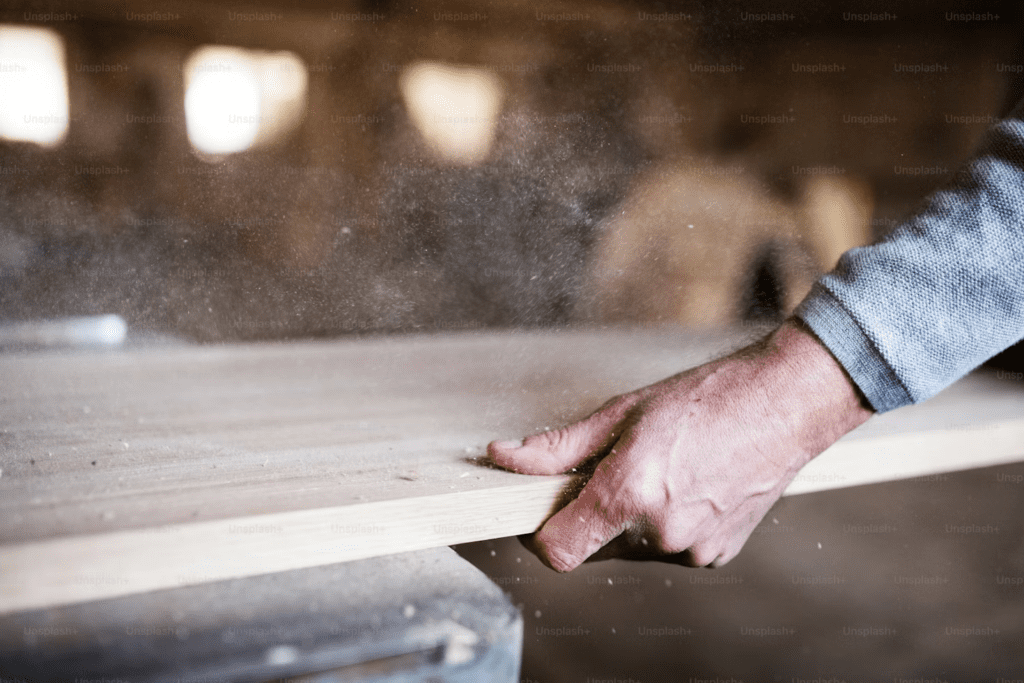
Edge-band sealing, simply put, is a processing technique that uses specialized equipment and adhesives (or special technologies) to tightly encase edge-band materials around the cut edges of engineered wood panels—such as particleboard, MDF, oriented strand board, and plywood. As we know, engineered wood panels are typically made by hot-pressing wood chips and fibers together with adhesives. After cutting, the exposed cross-sections around the edges reveal numerous pores and adhesive residues, which are precisely the root causes of formaldehyde emissions, moisture-induced deformation, and chipping or damage at the edges. The edge-band sealing process is therefore a “critical step” in addressing these issues.
The board material determines the fundamental performance of furniture, while the edge-banding process dictates the upper limits of furniture use and its quality and texture. Even the best board material will suffer a “penalty” if it isn’t paired with high-quality edge banding.
I. Four Mainstream Edge Banding Processes
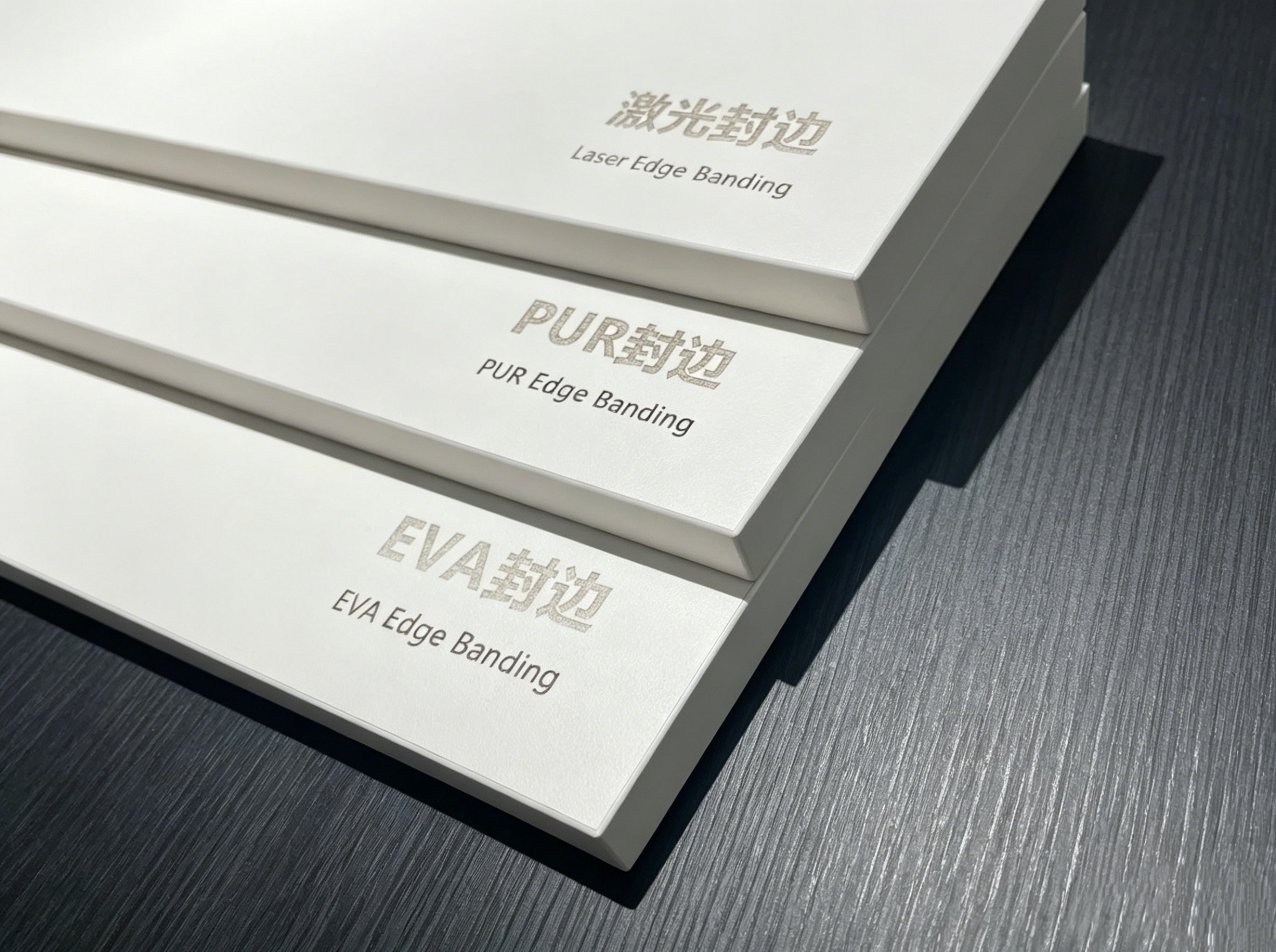
With the continuous advancement of technology, the mainstream edge-band sealing processes currently used in the furniture industry can be broadly categorized into four types: EVA edge banding, PUR edge banding, laser edge banding, and manual edge banding. These processes differ significantly in terms of their technical principles, equipment requirements, and finished product quality, making them suitable for a variety of needs and budgets.
1. EVA edge sealing: An entry-level, cost-effective choice
EVA edge banding is a traditional edge-band sealing process that uses ethylene-vinyl acetate copolymer hot-melt adhesive as the bonding material. After heating to melt the adhesive, the edge-banding strip is bonded to the cut surface of the board and then allowed to cool and solidify. This process is well-established and represents the most widely used entry-level edge-band sealing method currently available on the market.
Its advantages lie in its low cost, compatibility with various small and medium-sized manufacturers, and high construction efficiency, making it particularly attractive for scenarios with limited budgets. However, its shortcomings are equally evident: the adhesive tape is relatively thick, resulting in poor visual appeal; the bonding performance is significantly affected by temperature—under high-temperature conditions, it tends to soften, while in humid environments, it’s prone to cracking and edge warping. Moreover, the amount of hot-melt adhesive used is relatively large, which makes its environmental friendliness relatively weak and difficult to meet high-end eco-friendly requirements.
Applicable scenarios: Rental apartments, temporary transitional spaces, or situations with tight budgets and low requirements for furniture aesthetics and environmental friendliness. It is not recommended to prioritize these options for primary residences.
2.PUR edge banding: The mainstream choice for home use, offering the strongest overall performance.
PUR edge banding uses moisture-reactive polyurethane hot melt adhesive. Its key advantage lies in the fact that, during the bonding process, it undergoes an irreversible chemical reaction with moisture in the air, forming a strong adhesive layer. This process does not rely on high-temperature cooling for curing, and the resulting bond strength far exceeds that of EVA edge banding.
Compared to EVA edge banding, PUR edge banding features an extremely fine glue line—controllable within 0.1 mm—which is virtually invisible to the eye, significantly enhancing the aesthetic appeal of furniture. At the same time, PUR edge banding boasts excellent high-temperature resistance and moisture-proof performance, making it well-suited for humid environments such as kitchens and bathrooms, where it is less likely to crack or delaminate. Additionally, it requires a smaller amount of adhesive, greatly improving its environmental friendliness and meeting the eco-conscious needs of home-owning families.Its only drawback is that the cost is about 30% higher than EVA edge banding, and it’s relatively difficult to repair once cured. If damage occurs, the entire edge banding must be replaced.
Applicable scenarios: Suitable for the entire home, especially ideal for damp areas such as kitchens, bathrooms, and balconies. It’s also perfect for owner-occupied families who value quality and environmental friendliness yet have a moderate budget—making it currently the most cost-effective choice.
3. Laser edge sealing: Top-of-the-line, epitomizing minimalist aesthetics and the pinnacle of quality.
Laser edge banding is currently the most advanced edge-band sealing technology. It eliminates the need for additional adhesive by using a laser to instantly generate high temperatures—around 220°C—that activate the pre-coated adhesive layer on the surface of the edge band. This allows the edge band to achieve molecular-level fusion with the cut surface of the board, resulting in a seamless join.
This process boasts outstanding advantages: it features completely glue-free edges that visually blend seamlessly with the panel, achieving industry-leading aesthetic appeal; it requires no adhesives whatsoever, ensuring zero glue usage and zero formaldehyde emissions—making it exceptionally environmentally friendly and ideal for spaces with extremely high environmental standards, such as nurseries and baby rooms; it offers ultra-high bonding strength and exceptional durability, enabling lifelong use and completely eliminating issues like cracking and edge warping.
Its main shortcomings lie in cost and compatibility: compared to PUR edge banding, the price increases by another 20%–30%, bringing the overall cost close to twice that of EVA edge banding. Laser edge-banders are expensive to purchase, and there are relatively few manufacturers on the market with mature installation capabilities. Moreover, these systems have extremely high requirements for board flatness, making the adaptation threshold quite high.
Applicable scenarios: Families with ample budgets who prioritize exceptional aesthetics and environmental friendliness, or families with elderly members or children—especially well-suited for custom-made high-end furniture.
4.Hand-sealed edges: A traditional niche product—be cautious when ordering custom-made items.
Hand-sealing is the most traditional edge-band finishing method. It doesn’t require specialized, large-scale equipment; instead, carpenters manually apply glue, affix the edge band, and then use a trimming knife to remove any excess material. In some cases, a pneumatic nail gun is used for additional reinforcement, making this method highly flexible. It’s ideal for on-site construction, processing irregular edges, or small-batch personalized customization, and can handle special shapes that are difficult for machine-edge banding to manage. It’s well-suited for simple cabinetry made by on-site carpenters. However, its quality is extremely inconsistent, heavily reliant on the craftsman’s skill. The bonding seams tend to be wide, and harmful substances like formaldehyde are easily released. Moreover, it has very poor water and moisture resistance, making it highly susceptible to swelling, delamination, and peeling when exposed to humidity. It completely fails to meet environmental and durability standards, and its appearance is rough, with visible glue lines. In the long run, it’s prone to warping, cracking, and other defects.
Applicable scenarios: This method is rarely used in formal whole-house customizations and is typically reserved for on-site carpentry work, such as making cabinets or applying edge banding to specially shaped components. For home customizations, it’s best to avoid this approach altogether—especially in damp areas and on cabinets that are frequently used.
II. Key Purchase Points
In addition to clearly understanding the differences among the four processes, you should also pay attention to the following points when making your purchase to avoid pitfalls:
1.Examine the glue line: For high-quality edge banding, the glue line should be as thin as possible. The glue line for PUR edge banding must be ≤0.1 mm; laser-edge banding produces virtually no glue line. If the glue line is obvious or there’s excess glue, it indicates that the manufacturing process is substandard.
2.Touch the edge: A qualified edge banding should have a smooth, even surface with no burrs or unevenness. It should feel delicate and not prickly to the touch. If the edge feels rough or has burrs, it’s likely to scratch clothing and will have poorer durability.
3.Smell the odor: Environmentally friendly edge banding should not have a pungent or irritating odor. If you detect a noticeable, irritating smell, it indicates poor glue quality or problems in the manufacturing process, and there may be a risk of excessive formaldehyde levels—such products should be immediately ruled out.
4. Ask about the brand: The quality of edge-banding adhesive directly affects both environmental friendliness and durability. Prioritize manufacturers that use imported adhesives (such as the German “Glue King”). Clearly specify the adhesive brand and edge-banding process in the contract to prevent suppliers from substituting inferior products for higher-quality ones.
5. Check the equipment: PUR edge banding requires specialized edge-banders, while laser edge banding demands professional equipment costing millions. Small and medium-sized manufacturers typically lack the necessary capabilities; when making a purchase, you can request to see the manufacturer’s equipment qualifications.
III. Summary
Based on your budget and needs, you can quickly determine the right purchasing direction: If your budget is limited and the property isn’t for personal residence (e.g., a rental property), you can opt for EVA edge banding. If your budget is moderate and you prioritize quality and environmental friendliness, PUR edge banding is the top choice for owner-occupied households, offering an excellent balance of cost-effectiveness and practicality. If your budget is ample and you’re aiming for the ultimate aesthetic appeal and eco-friendliness, laser edge banding is the way to go, providing a dual upgrade in both beauty and durability.
Finally, a reminder: There’s no such thing as an “absolute best” edge-banding technique—only the “most suitable” one. By selecting the appropriate technique and edge-band material based on your budget, intended use, and aesthetic preferences, you can ensure that your furniture is both practical and durable while also meeting your expectations in terms of appearance, truly allowing edge-banding to fulfill its role as a “guardian of quality.”