
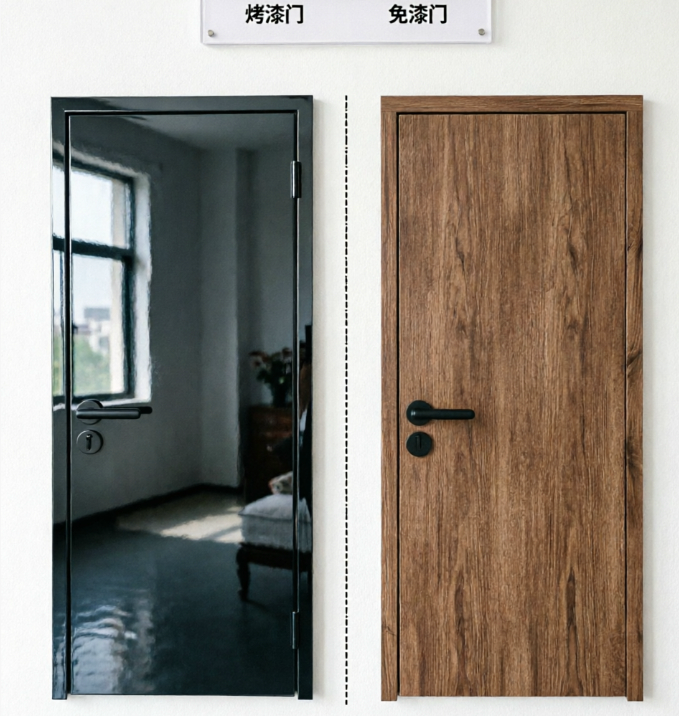
Wooden door products of various brands on the current market can be generally classified into two categories—painted doors and unpainted doors (no-paint doors)—based on their core production processes. Though differing by just one character in name, they vary significantly in production technology, surface treatment, physical properties and applicable scenarios. In short, painted doors are formed via spraying and baking processes, while unpainted doors are shaped through veneer laminating technology. To help consumers make rational choices and avoid purchasing pitfalls, this article elaborates systematically from the perspectives of process comparison, core advantages and purchasing criteria.
Ⅰ. Comparison of Core Processes and Characteristics
The essential differences between unpainted doors and painted doors lie in key aspects such as forming method, surface texture and visual effect, with specific comparisons as follows:
| Comparison Dimension | Unpainted Doors | Painted Doors |
| Forming Logic | Formed by physical covering through film laminating or hot-pressing veneer | Formed by chemical film curing through multi-layer spray painting and high-temperature baking |
| Surface Touch | Smooth and compact, available in diverse textures like wood grain and skin feel | Exquisitely smooth with high gloss and mirror effect |
| Mainstream Technology | PVC vacuum thermoforming, melamine veneer hot-pressing | Multi-layer spraying of primer and topcoat, polishing, high-temperature curing |
| Visual Presentation | High wood grain restoration, rich color and texture options | High color saturation, gorgeous texture and strong visual impact |
Considering the three core dimensions of comprehensive cost performance, practicality and environmental protection, unpainted doors are the mainstream choice in the current home decoration market and more suitable for most families as a priority option.
Ⅱ. Key Reasons to Recommend Unpainted Doors
1.Abundant styles and colors, suitable for all home decoration
stylesUnpainted doors offer a wide range of veneer textures, colors and shapes, which can accurately match mainstream decoration styles such as modern, minimalist, light luxury and wood grain styles. Painted doors have relatively single color systems and shapes, making it difficult to meet the diverse design needs of home decoration.
2.Excellent physical properties, higher durability for household use
The surface paint film of painted doors has low hardness, and irreversible marks are easily caused by slight collisions and scratches. Unpainted doors feature high-hardness surface materials with outstanding scratch resistance, wear resistance and impact resistance, suitable for families with children or frequent furniture moving, and are not easily damaged with long-term use.
3.Higher environmental protection grade, more friendly indoor environment
Painted doors require multi-layer paint spraying, and inferior products are prone to residual pungent odors with relatively high formaldehyde and volatile organic compound (VOC) emissions. Unpainted doors adopt a paint-free process throughout, with no obvious odor after installation, providing more guaranteed environmental performance.
4.Outstanding cost performance, higher budget friendliness
The market unit price of qualified, environmentally friendly and stable painted doors is usually above 300 US dollars, and low-priced products can hardly guarantee quality and environmental standards. Unpainted doors can achieve high-end configuration at the price point of 150 US dollars, delivering better quality and experience at the same budget.
III. Core Purchasing Criteria for Wooden Doors
A complete wooden door consists of four parts: door leaf, door jamb board, door line and lock set. Key indicators to focus on when purchasing are as follows:
1.Door leaf thickness: Thickness determines stability
The height of door openings in modern home decoration generally reaches 2.2 meters, making door leaves taller and heavier. Insufficient thickness may lead to sagging, deformation, poor sound insulation and other problems.
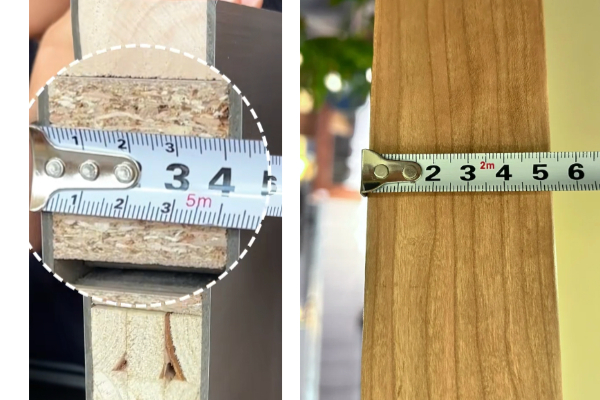
- Minimum standard: Not less than 4.5 cm
- Preferred standard: A thickness of 5 cm can significantly improve the stability, sound insulation effect and service life of the door leaf.
2.The top and bottom ends of the door leaf must be fully edge-sealed
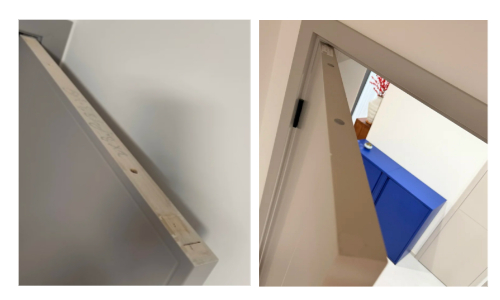
Check the top and bottom of the door leaf when purchasing. Exposed base material due to no edge-sealing is prone to moisture and deformation, reducing sealing performance and service life. Complete edge-sealing at the top and bottom ends is a necessary condition for qualified craftsmanship.
3.Choose materials rationally, do not blindly pursue solid wood
Solid wood doors have a high texture and grade, but their stability is poor due to the natural characteristics of wood. They are prone to cracking and deformation in dry areas or under floor heating conditions. For home decoration, solid wood composite doors and CPL doors are highly recommended for their strong stability, resistance to deformation and cracking, and better practicality and durability.
4.Internal filling material: Reject conceptual misleading
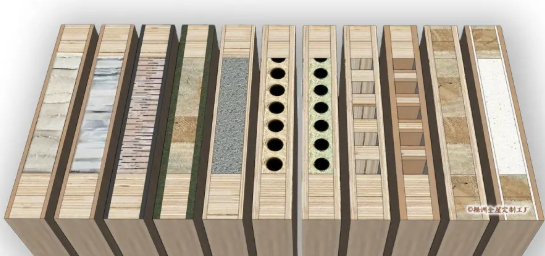
There are significant performance differences between common filling materials on the market, with the following selection suggestions:
- Honeycomb paper: Poor quality and easy to deform, not recommended
- MDF grid: Low cost and general structural strength
- Graphene filling: Essentially foam material with moderate thermal insulation and sound insulation effects
- Bridge hole mechanical board: Good stability and sound insulation performance
- Solid wood mechanical filling / solid wood square filling: Sturdy structure and high durability, a top choice for high quality
Note: Solid wood square filling is divided into full filling and half filling, which must be clearly confirmed before purchase. Simple judgment method: For door leaves of the same specification, the heavier the weight, the more solid the internal materials are generally.
IV. Purchasing Summary
For wooden door selection in home decoration, unpainted doors are the first choice, with the advantages of rich styles, scratch and wear resistance, environmental safety and high cost performance, suitable for the vast majority of family scenarios.
Keep in mind the core purchasing points: 5 cm door leaf thickness, full edge-sealing at the top and bottom ends, solid wood composite base material, solid internal filling and heavy door leaf weight. By following these points, you can effectively avoid purchasing pitfalls and select high-quality wooden doors.