
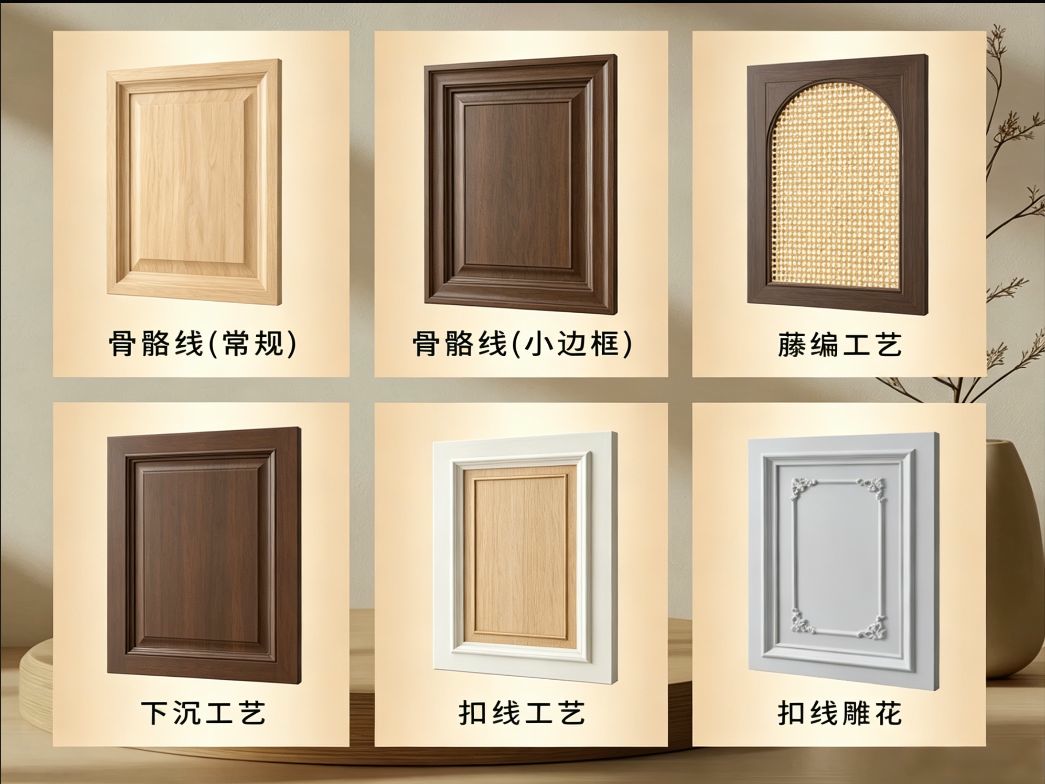
In whole-house custom design, cabinet doors not only serve the core function of storage but also act as visual carriers of spatial style and key elements in showcasing texture. Choosing the right cabinet door finish can both enhance the overall coherence of the space design and elevate the sophistication and practicality of the entire renovation. This article will provide a detailed analysis of six mainstream cabinet door finishes, exploring their unique characteristics and suitable styles to offer professional guidance for whole-house custom design and material selection.
When choosing cabinet door finishes for custom home furnishings, it’s essential to consider factors such as the decoration style, room size, usage scenarios, and aesthetic preferences in a comprehensive manner. The following six finishing techniques cover today’s mainstream design styles, balancing both beauty and practicality, and are widely recognized as high-quality choices within the industry.
I. Conventional skeletal line process
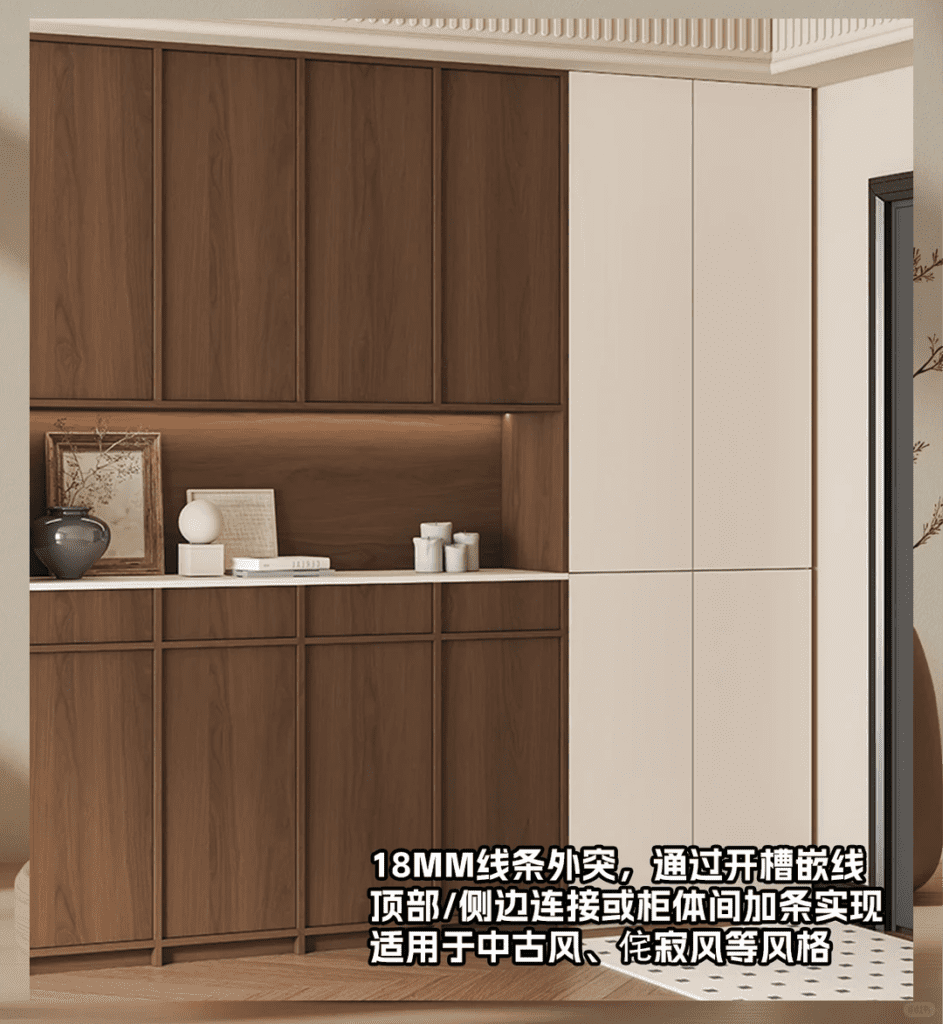
The conventional skeletal-line technique is characterized by an 18mm raised line, crafted through a specialized grooving and inlay process. This technique accentuates the three-dimensional quality of the lines, effectively enhancing the depth and texture of cabinet doors. With its timeless and appealing design, this technique has become a key choice for mid-century modern and wabi-sabi-style interiors. Its calm, structured lines perfectly complement the serene and rustic aesthetic of these styles, enabling quick creation of an immersive spatial atmosphere. This technique is highly versatile and suitable for a wide range of cabinetry, particularly ideal for entryway cabinets, sideboards, wardrobes, and bookcases. It seamlessly blends practicality with decorative appeal, effortlessly integrating into various home settings and meeting the diverse functional needs of different spaces.
II. Small Border Skeleton Line Process
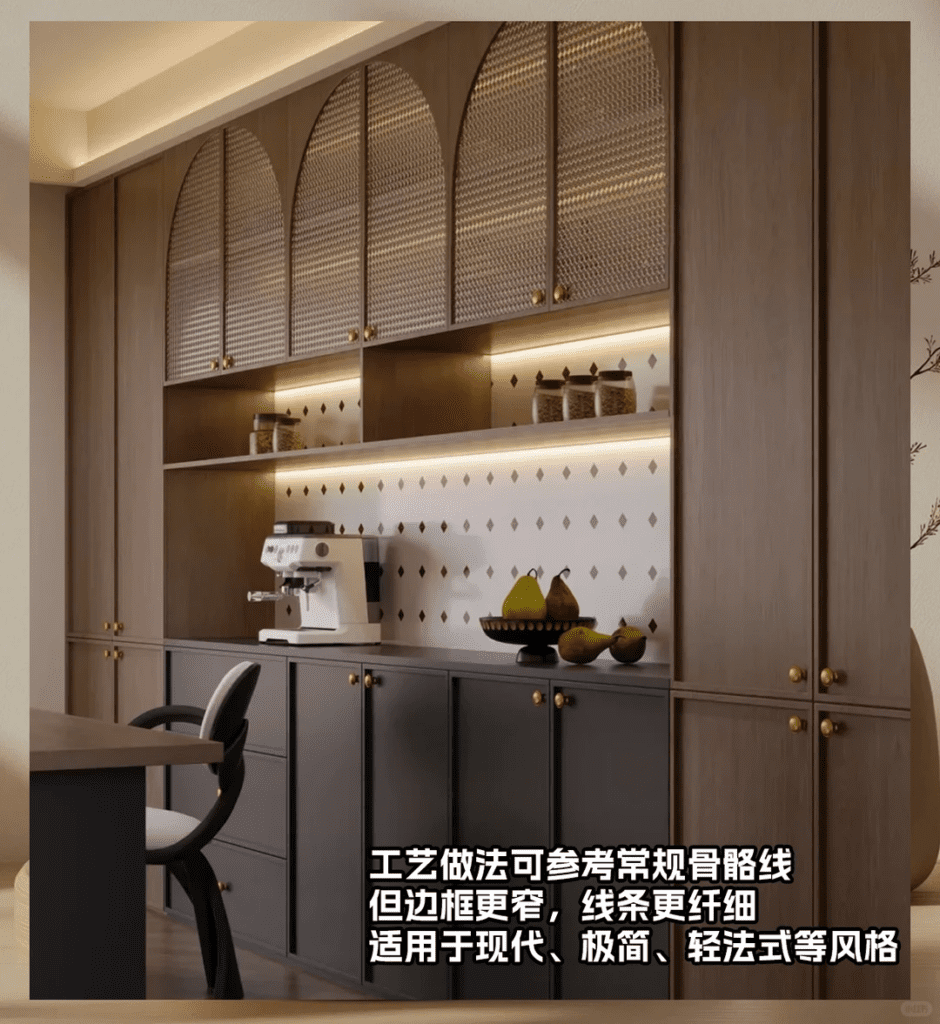
The small-border skeletal-line technique is an optimized version of the conventional skeletal-line process. The key difference lies in its narrower border width and finer lines, which eliminate the bulky feel typical of standard designs, delivering a light and refined visual effect. This technique is particularly well-suited to modern, minimalist, and轻法式 (light French) styles—decorating aesthetics that emphasize simplicity and elegance. Its delicate lines help soften the heaviness of cabinet bodies, making the space appear more open and airy, especially ideal for custom whole-house solutions in small apartments. In terms of cabinet applications, this technique is most commonly used for wardrobes, kitchen cabinets, and balcony cabinets. By effectively enhancing the sophistication of a space without visually encroaching on it, it perfectly aligns with the minimalist design demands of contemporary homes.
III. Rattan Weaving Craft
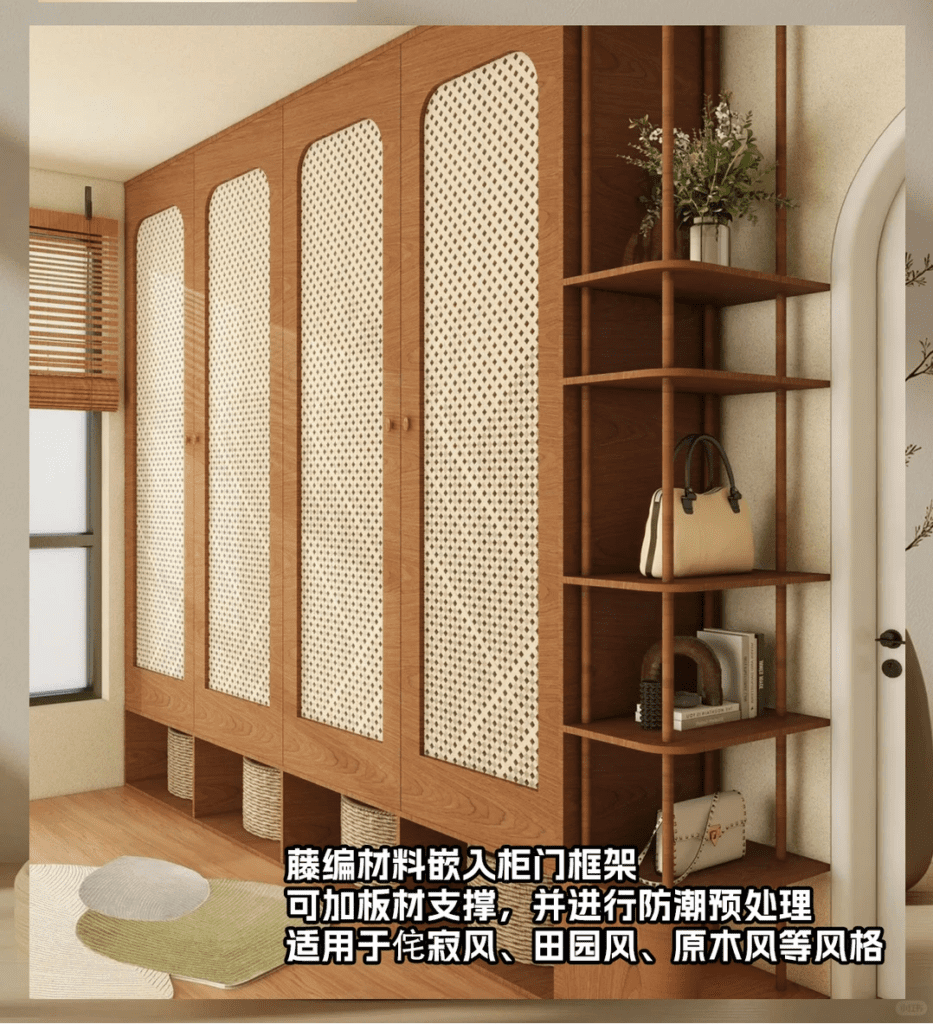
The rattan cabinet door craftsmanship involves embedding natural rattan material into the cabinet door frame. During production, the rattan undergoes professional pre-treatment to resist moisture and repel insects, effectively addressing the common issues of natural rattan being prone to dampness and deformation, thereby extending the lifespan of the cabinet. This technique naturally features a textured surface and a breathable quality, with soft lines and a warm, gentle texture. It perfectly complements interior design styles that emphasize natural textures, such as Wabi-Sabi, rustic, and log cabin styles. It can infuse spaces with a gentle and serene atmosphere, breaking away from the monotony of traditional cabinet doors and endowing the cabinets with greater character.the natural aesthetic value of the material. This process is best suited for cabinetry such as sideboards, bookcases, and entryway cabinets. It’s important to avoid using it in damp environments like kitchens and bathrooms to prevent damage to the rattan material and ensure its longevity.
Ⅳ.Bottom-up process
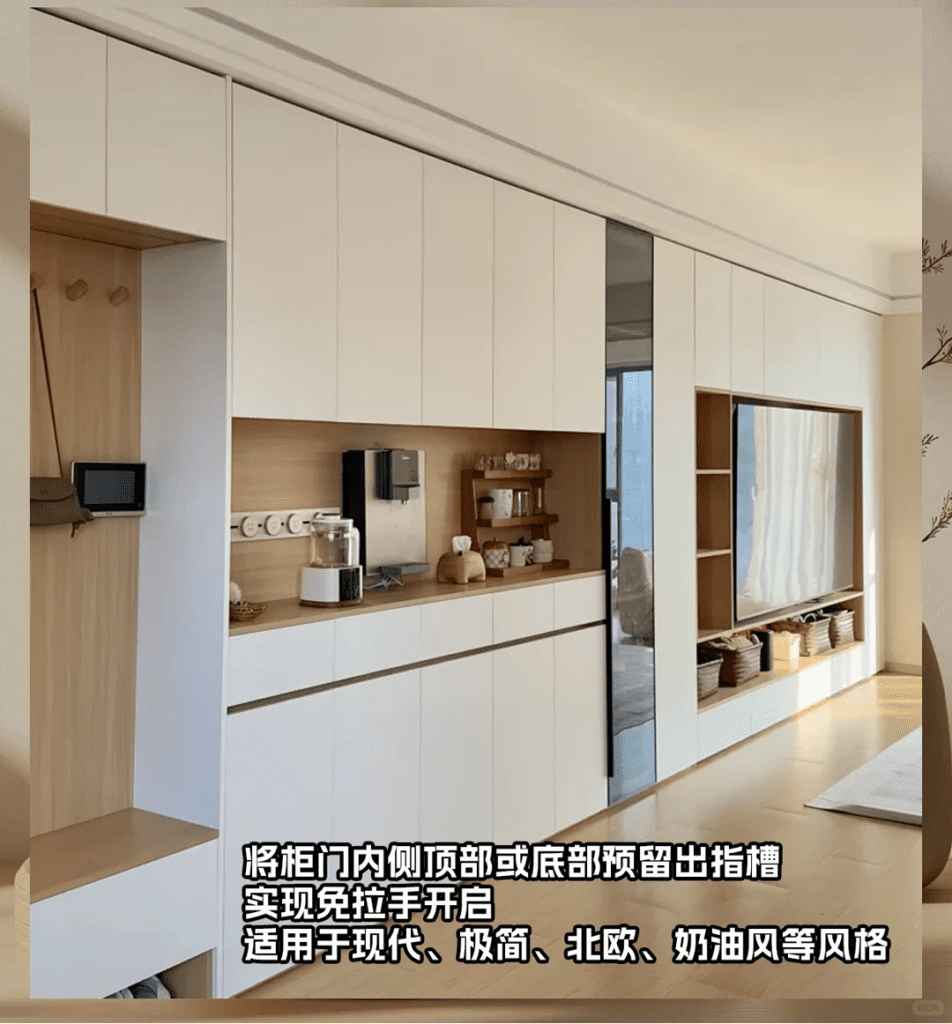
The core of the recessed craftsmanship lies in the design of finger grooves reserved on the inside of cabinet doors, enabling hands-free opening without the need for additional handles, thus keeping the door surfaces smooth and seamless. This technique emphasizes a clean, crisp visual effect with no superfluous ornamentation. It not only eliminates the risk of bumps and scrapes caused by traditional handles but also perfectly complements modern, minimalist, Nordic, and cream-style interior designs—styles that prioritize simplicity and tidiness. It’s especially well-suited for those who strive for ultimate cleanliness and orderliness, making it a practical and aesthetically pleasing choice. Moreover, this craftsmanship helps create a unified and fluid visual experience throughout the space. The technique is compatible with various types of cabinets—including wardrobes, kitchen cabinets, balcony cabinets, and bathroom vanities—and can be applied to both dry and humid environments, offering exceptional practicality.
V. Threading Process
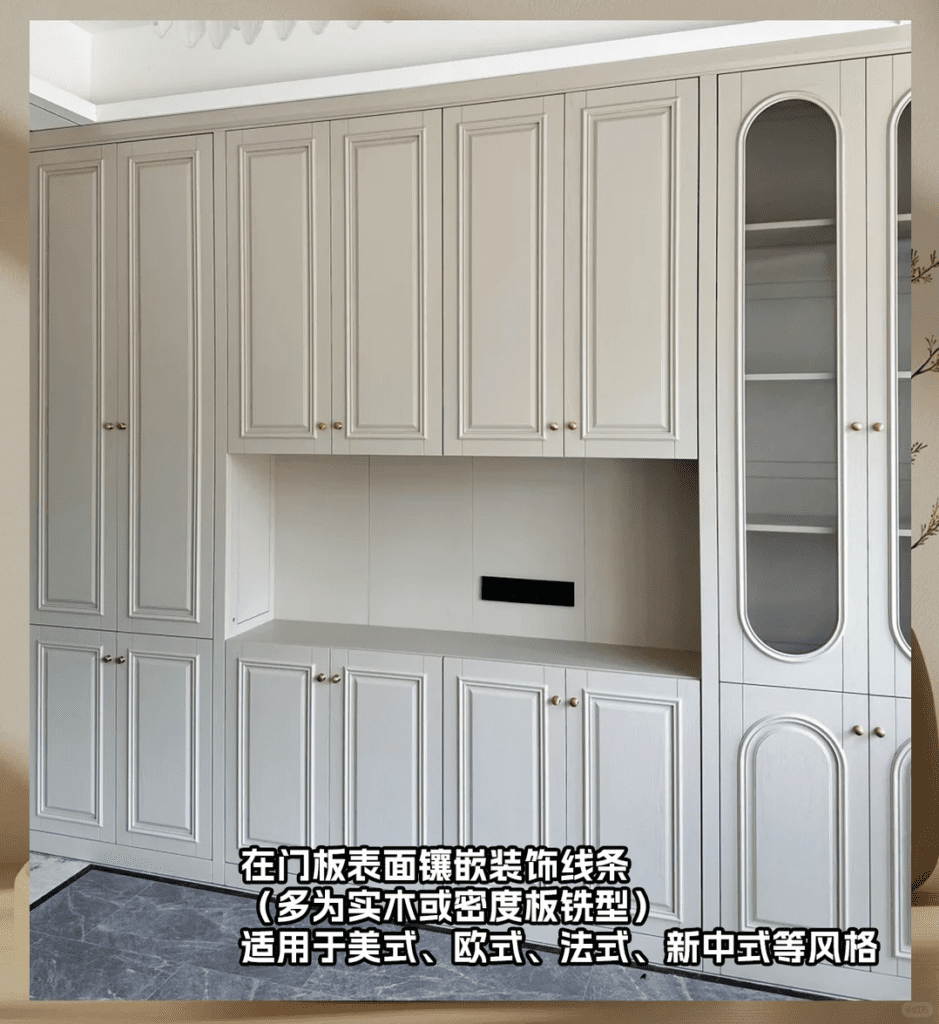
The inlaid-line technique involves embedding decorative trims onto the surface of door panels. These trims are typically made from solid wood or MDF and are crafted using specialized milling processes, resulting in three-dimensional, well-defined lines that significantly enhance the decorative depth of cabinet doors. This technique exudes a vintage yet sophisticated aesthetic, making it an ideal match for interior design styles such as American, European, French, and New Chinese—styles that place great emphasis on ceremony and ornamentation. The meticulously designed lines effectively elevate the sense of occasion within a space, helping to break away from monotony and imbue cabinet doors with a refined, dignified texture. This technique is particularly well-suited for cabinetry types including wardrobes, sideboards, entryway cabinets, and TV cabinets, offering both decorative appeal and practical functionality while subtly accentuating the space’s vintage charm.
6. Thread-Loop Carving Technique
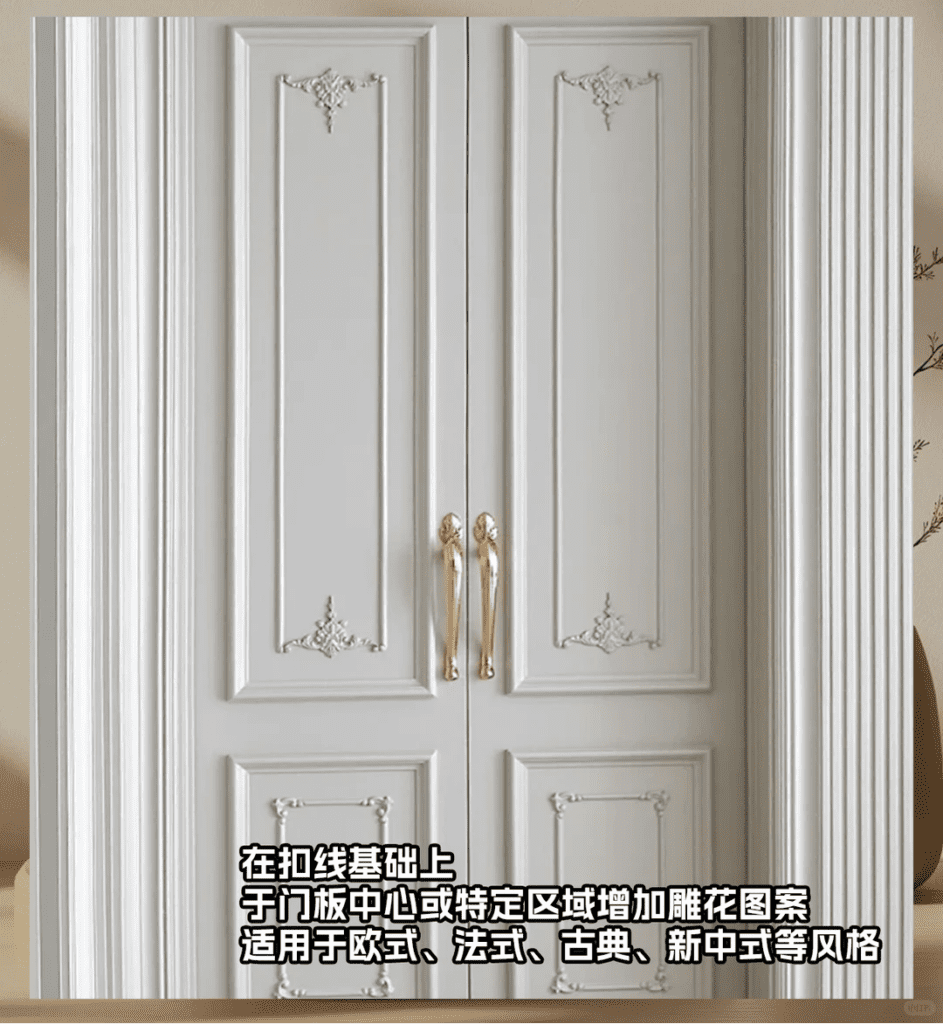
The carved-thread carving technique builds upon the traditional thread-binding process by adding intricate floral patterns. The delicate carvings are meticulously handcrafted or precisely machined, featuring smooth lines and fine textures that perfectly blend craftsmanship with aesthetic appeal. This technique emphasizes a luxurious and grand visual effect, with rich attention to detail, making it ideal for high-end, refined interior styles such as European, French, classical, and Neo-Chinese designs. The carved floral motifs combine artistic flair with visual appeal, significantly enhancing the luxury and artistic value of custom-made home furnishings and turning them into the focal point of any space. This technique is particularly well-suited for cabinetry—including wardrobes, entryway cabinets, and TV cabinets—and is often used in key display areas like living rooms and bedrooms, highlighting the sophisticated texture and elegance of home interiors.
In summary, the six cabinet door finishes each have their own unique characteristics and are suited to different decorating styles and usage requirements. During whole-house customization, it’s essential to select the appropriate cabinet door finish by taking into account the space’s style, usage scenarios, and personal aesthetic preferences, thereby achieving a dual enhancement of functionality and aesthetics and creating a whole-house space that is both practical and exquisitely designed.