
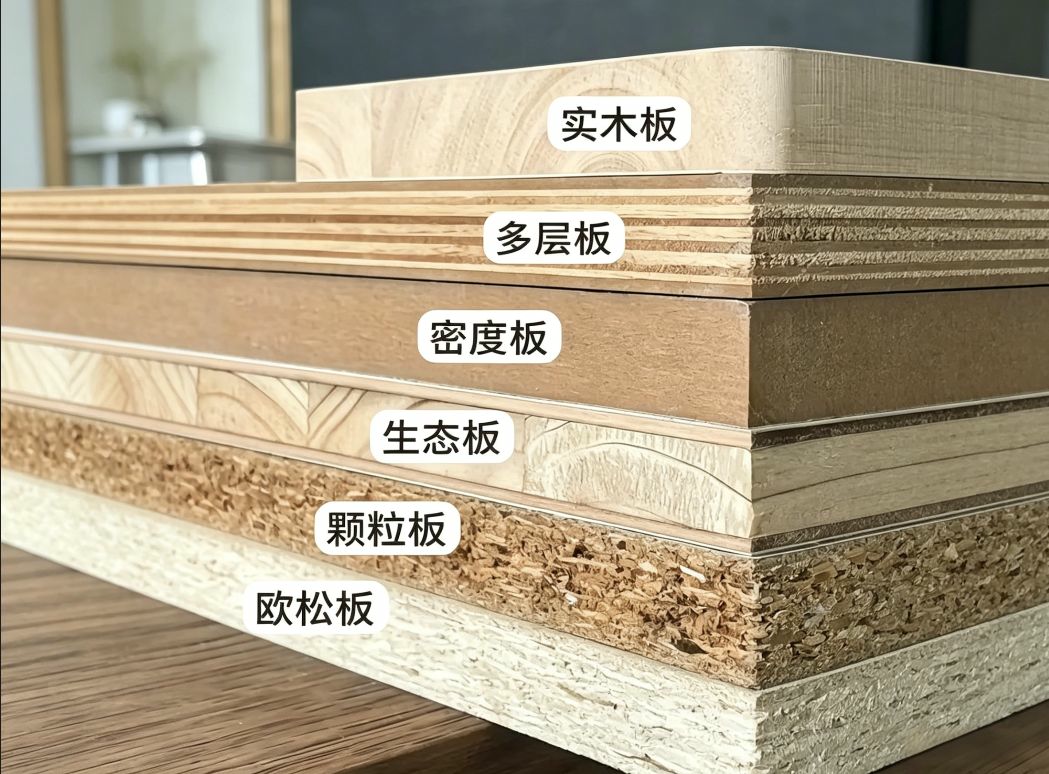
During home renovation, panel materials are indispensable core components—found in virtually every space, from wardrobes and kitchen cabinets to walls and floors. Yet, faced with the wide variety of panel types available on the market—solid wood, particleboard, plywood, eco-friendly panels…—many homeowners find themselves overwhelmed by “choice paralysis,” unsure which type is best suited for their homes and unable to distinguish between the strengths and weaknesses of different materials. Today, we’ll provide a comprehensive guide to understanding various renovation panel materials, helping you avoid common misconceptions, choose the right panels, and ensure your home is both beautiful and functional, safe and durable.
I. Common Types of Decorative Boards and Their Core Characteristics
The classification of decorative boards is primarily based on material and processing techniques. Different types of boards vary significantly in terms of environmental friendliness, moisture resistance, and load-bearing capacity, and they are suited for different application scenarios. Below, we’ll focus on introducing the five most commonly used board types to help you quickly distinguish between them.
1.Solid wood panels: Natural texture, eco-friendly first choice
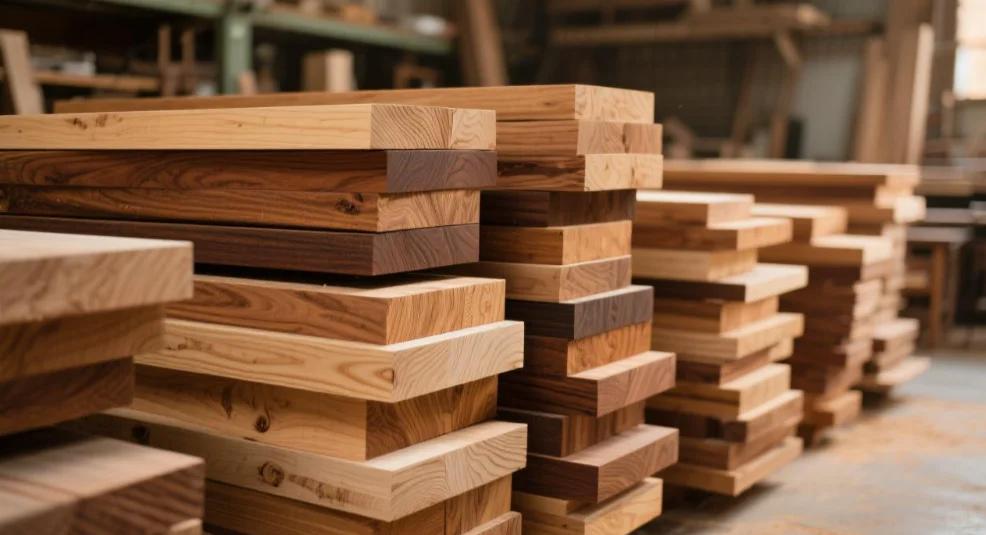
Solid wood boards are made by directly cutting, sanding, and processing whole pieces of wood—such as pine, oak, beech, walnut, and others—without adding any other adhesives. They are among the most natural and environmentally friendly types of wood boards available.
Key features: The texture is naturally beautiful and has a delicate feel; it’s highly breathable and free of formaldehyde contamination (provided no harmful coatings have been applied). However, the price is relatively high, and it’s susceptible to environmental factors (it tends to warp in humid conditions and crack in dry conditions). Its hardness is uneven, and it requires relatively complex maintenance.
Key features: The texture is naturally beautiful and has a delicate feel; it’s highly breathable and free of formaldehyde contamination (provided no harmful coatings have been applied). However, the price is relatively high, and it’s susceptible to environmental factors (it tends to warp in humid conditions and crack in dry conditions). Its hardness is uneven, and it requires relatively complex maintenance.
2.Particleboard (chipboard): The king of cost-effectiveness, with the widest range of applications.
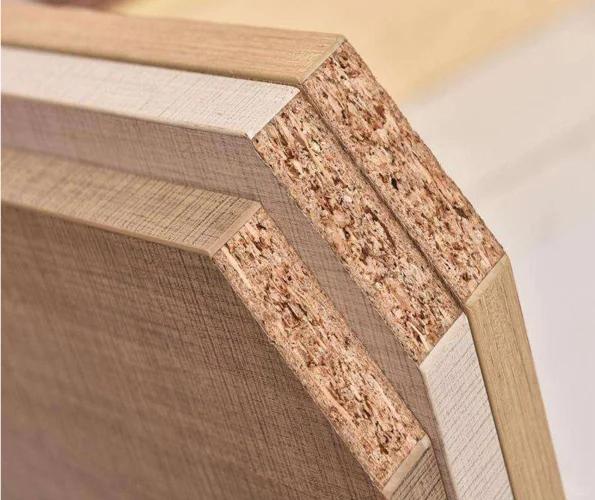
Particleboard is a type of board made by processing wood into fine wood chips, adding environmentally friendly adhesives (such as urea-formaldehyde glue or MDI glue), and then pressing the mixture under high temperature and pressure. It is currently one of the most widely used materials in interior decoration and has become the mainstream choice for custom furniture.
Key features: Affordable price and high cost performance; uniform structure, resistant to deformation, with moderate load-bearing capacity; environmental friendliness depends on the quality of the adhesive (high-quality particleboard can achieve E0 or ENF formaldehyde emission levels); poor moisture resistance—edges are prone to chipping—and should not be exposed directly to water.
Applicable scenarios: Suitable for custom wardrobes, cabinet bodies, TV cabinets, bookcases, etc.; not suitable for damp areas such as kitchens and bathrooms.
3.Multi-layer solid wood board (plywood): Moisture-resistant and durable, balancing practicality with environmental friendliness.
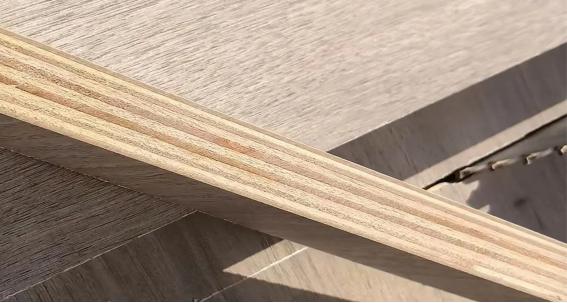
Multi-layer solid wood boards are made by alternately layering multiple thin wood veneers (slices) and bonding them together with environmentally friendly adhesives, then pressing them under high temperature and pressure. They are also known as “plywood” and serve as a high-quality substitute for solid wood boards.
Key features: Significantly superior moisture resistance compared to particleboard, less prone to deformation and cracking, and strong load-bearing capacity; natural wood grain with a texture close to solid wood, and relatively environmentally friendly (using less glue than particleboard); priced between solid wood boards and particleboard, with well-finished edges that are less likely to chip or splinter.
Applicable scenarios: Suitable for cabinet bodies, wardrobe bodies, balcony cabinets, bathroom cabinets, and more. Particularly well-suited for humid environments, it can also be used for flooring (multi-layer solid wood flooring).
4.Eco-board (melamine-faced board): Combining aesthetics with practicality.
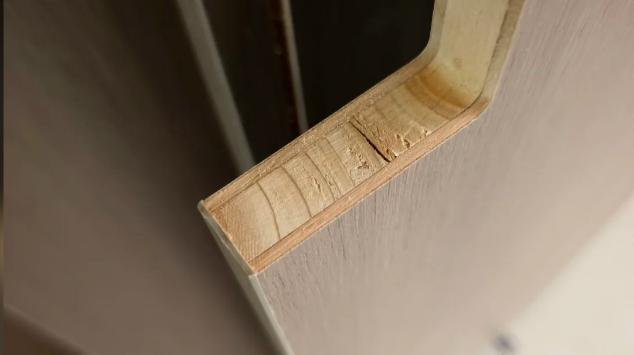
An eco-board is not a standalone material; rather, it’s a board made by applying a layer of melamine decorative paper onto the surface of a base material—typically particleboard or plywood. The decorative paper comes in a wide variety of patterns and can simulate textures such as solid wood grain or stone finishes.
Key features: The surface is smooth and flat, wear-resistant, scratch-resistant, and dirt-resistant; no additional painting required, making installation convenient. Environmental friendliness depends on the quality of the substrate and adhesive. It boasts a high aesthetic appeal, comes in a variety of styles, and is priced moderately. Moisture resistance is average—if the substrate is particleboard, its moisture resistance is relatively poor.
Applicable scenarios: Ideal for custom wardrobes, cabinet doors, TV cabinets, desks, and more—perfect for homeowners who value both aesthetics and convenience.
5.Density board (medium-density fiberboard): Fine and easy to work with; use with caution in damp areas.
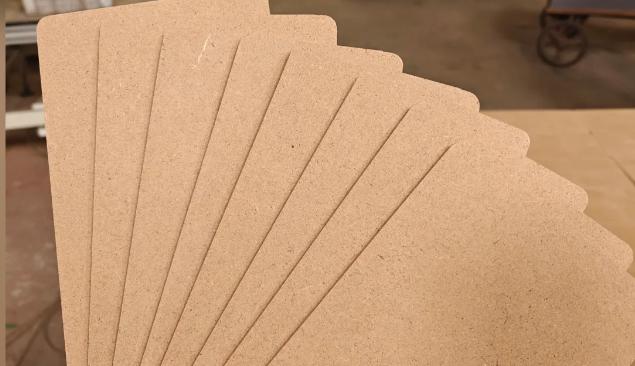
Density board is made by grinding wood fibers (or plant fibers) into fine particles, adding glue, and then pressing them under high temperature and pressure. It has a fine texture and no obvious grain pattern.
Key features: Uniform texture, easy to process, suitable for carving and polishing, ideal for creating intricate designs; relatively low price; environmental friendliness depends on the quality of the adhesive; extremely poor moisture resistance—easily expands, deforms, and cracks upon contact with water; relatively weak load-bearing capacity.
Applicable scenarios: Suitable for decorative modeling, background walls, door frames, baseboards, etc., but not suitable for cabinet bodies or use in damp areas.
II. Key Considerations for Selecting Decorative Boards (Critical Tips to Avoid Pitfalls)
When choosing Sheet material, focus on three key factors: environmental friendliness, practicality, and cost-effectiveness. Among these, environmental friendliness is paramount, as it directly affects your family’s health. Next, select with appropriate characteristics based on the intended use scenario.
1. Environmental friendliness: Pay attention to formaldehyde emission levels and say no to “hidden hazards.”
The environmental friendliness of wood-based panels primarily depends on the quality of the adhesive used, with formaldehyde emission levels being the key indicator. Currently, China’s mainstream standards are divided into three grades:
•ENF grade: Formaldehyde emission level ≤ 0.025 mg/m³—the most environmentally friendly, ideal for households with elderly people, children, and pregnant women.
•E0 Grade: Formaldehyde emission ≤ 0.050 mg/m³, excellent environmental performance, and currently the mainstream choice;
• E1 Grade: Formaldehyde emission ≤ 0.124 mg/m³—this is the minimum standard. It is not recommended for use in enclosed spaces such as bedrooms and children’s rooms.
When making a purchase, be sure to ask the seller for an authoritative testing report to avoid buying boards that lack any certification or labeling (“three-no” products). Also, keep in mind that even with eco-friendly boards, extensive and dense use—such as in custom-built wardrobes and kitchen cabinets throughout the entire home—can still lead to excessive indoor formaldehyde accumulation. After renovation, ensure thorough ventilation.
2. Practicality: Select features based on specific scenarios, and avoid blindly pursuing “high-end” solutions.
Different spaces have different usage requirements, so board selection must also be “tailored to the specific need”:
• Moisture-prone areas (kitchen, bathroom, balcony): Prioritize multi-layer solid wood boards and moisture-resistant particleboards; avoid using medium-density fiberboard and ordinary particleboards.
• Load-bearing areas (wardrobe bodies, cabinet bodies): Prioritize multi-layer solid wood boards and high-quality particleboard; density boards lack sufficient load-bearing capacity and are not recommended.
• Aesthetic requirements (door panels, background walls): Prioritize eco-friendly boards and solid wood panels with beautiful grain patterns—no additional decoration needed.
• Limited budget: Prioritize high-quality particleboard and eco-friendly boards—cost-effective and perfectly suited for everyday use.
3. Cost-effectiveness: Say no to “high price = high quality”—choose according to your needs.
The price ranking of wood panels (from highest to lowest): solid wood panels > multi-layer solid wood panels > eco-friendly panels > particleboard > medium-density fiberboard. However, a higher price doesn’t necessarily mean it’s the right choice for you. For example, for a living room TV cabinet, using high-quality particleboard can easily meet your needs without having to spend a premium on solid wood panels. On the other hand, for kitchen cabinet bodies, opting for multi-layer solid wood panels—though slightly more expensive—is more durable and moisture-resistant, making it a better long-term investment.
In addition, when selecting materials, pay attention to the thickness of the boards (cabinet bodies typically use 18mm-thick boards, while door panels usually come in 15mm or 18mm thickness) and edge finishing (the edges should be tightly sealed to prevent chipping and reduce formaldehyde emissions). These details directly affect the service life of the boards.
III. Correcting Common Misconceptions and Avoiding Renovation Pitfalls
• Misconception 1: Solid wood panels are always the best? — While solid wood panels are environmentally friendly and have a high-quality texture, they are prone to warping, difficult to maintain, and expensive. They’re not suitable for every space, so use them with caution in humid areas.
• Misconception 2: Particleboard isn’t environmentally friendly? — High-quality particleboard (using MDI glue, E0 or ENF grade) has extremely low formaldehyde emissions, meets stringent environmental standards, and offers excellent cost-effectiveness. It’s the mainstream choice for custom furniture—what matters most is the type of glue used and the certification level.
• Misconception 3: The thicker, the better? — The thickness of boards should be chosen based on their intended use. For cabinet bodies, a thickness of 18mm is sufficient to support weight; for door panels, 15mm is adequate. Going excessively thick not only increases costs but also proves unnecessary.
• Misconception 4: Focusing only on environmental friendliness and ignoring the manufacturing process? Even with eco-friendly boards, poor edge sealing and loose joints can still lead to formaldehyde leakage, compromising both environmental performance and service life.
Ⅳ.Summary: When choosing Sheet material, the best option is the one that suits you best.
When choosing Sheet material for home renovation, there’s no need to blindly pursue high-end options, nor should you be confused by the wide variety of types available. The key is to first clearly define the intended use scenario—whether it’s a humid or dry environment, or for load-bearing purposes versus decorative use—and then, based on your budget, select Sheet material that meet the required environmental standards and have been manufactured using proper techniques.
If your budget is ample and you prioritize quality, give priority to solid wood panels or multilayer solid wood boards. If your budget is limited and you place emphasis on practicality For construction, high-quality particleboard and eco-friendly boards are the top choices. In damp areas, pay special attention to moisture resistance and avoid using medium-density fiberboard (MDF) and ordinary particleboard. Remember: environmental friendliness is the bottom line, while craftsmanship is the key. Choosing the right board material is essential for building a solid foundation for your home—ensuring both beauty and durability while safeguarding your family’s health.