
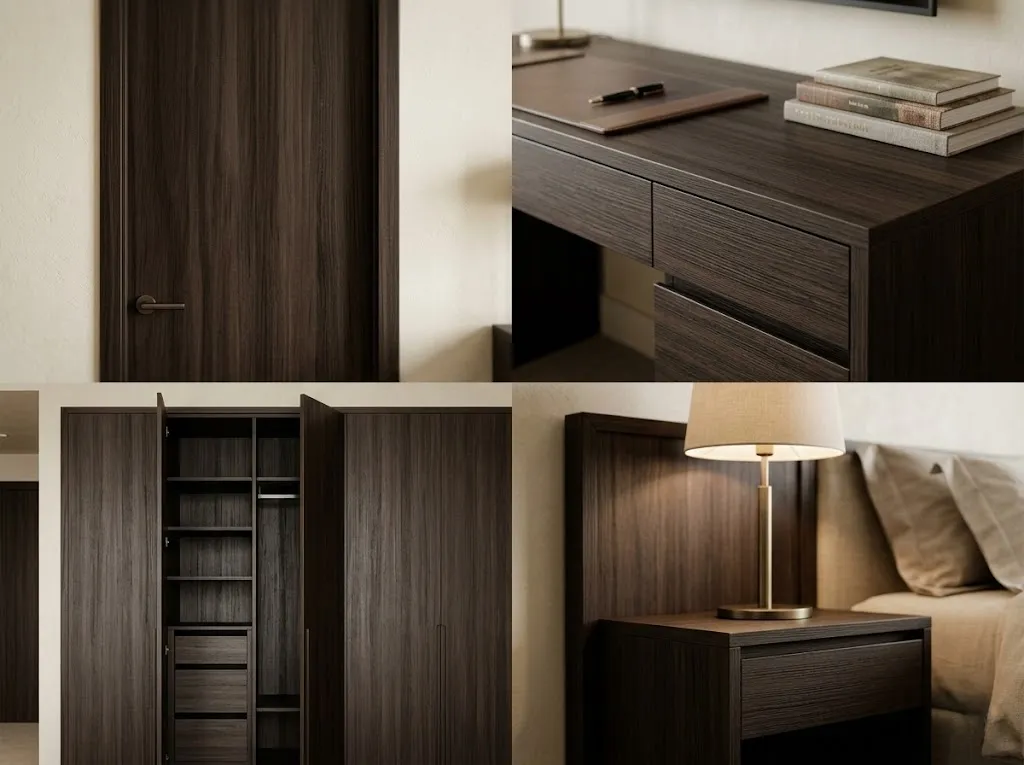
Melamine board, commonly known as ecological board or paint-free board, is one of the most commonly used mainstream materials in modern home decoration and furniture manufacturing. Its core value lies in a combination of characteristics that balance practicality and economy—it not only has prominent advantages suitable for daily use scenarios but also has clear performance shortcomings. Grasping these characteristics accurately can help us use it more reasonably, give full play to its use value, and avoid misunderstandings in material selection and use.
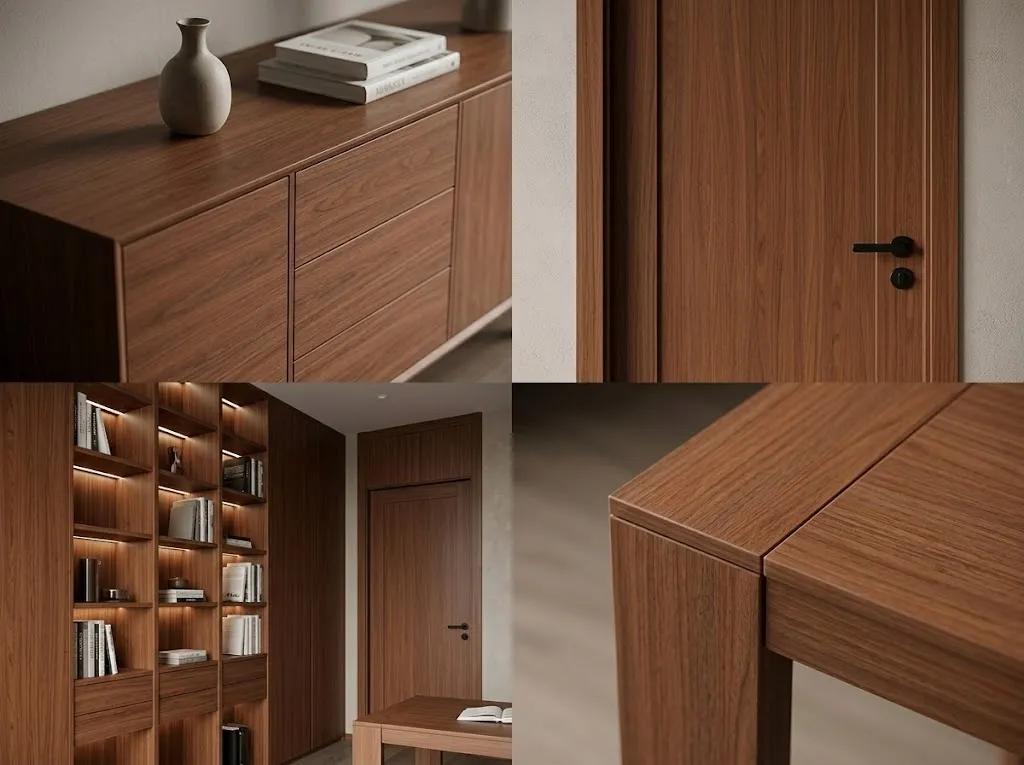
Many people have misunderstandings about melamine board. It is necessary to clarify one point: it does not use melamine as the base material, but is a composite board made by soaking decorative paper printed with textures or colors in melamine resin adhesive for full curing, then paving it on the surface of base materials such as particleboard and medium-density fiberboard (MDF), and pressing it at high temperature and pressure. In particular, it should be clarified that it has nothing to do with the “melamine incident”. The melamine resin in qualified products is stable and non-toxic after curing, fully complying with indoor use safety standards, and can be safely used in home environments.
The advantages of melamine board are very suitable for public needs and highly practical: first, it is durable and easy to maintain. After the surface is cured by resin, it has high hardness, wear resistance and heat resistance, which can easily resist daily scratches and stain erosion. It does not require complex maintenance and can be kept clean by wiping with a damp cloth daily, with a long service life; second, it has a variety of appearances and strong adaptability. It can accurately simulate various styles such as wood grain, stone grain and cloth grain, making it suitable for various decoration styles such as modern simplicity, Nordic style and new Chinese style. Moreover, the paint-free process reduces the emission of harmful substances, balancing beauty and environmental protection; third, it has outstanding cost performance. Its price is much lower than that of solid wood boards, and it can be directly cut and installed, greatly saving construction time and labor costs.
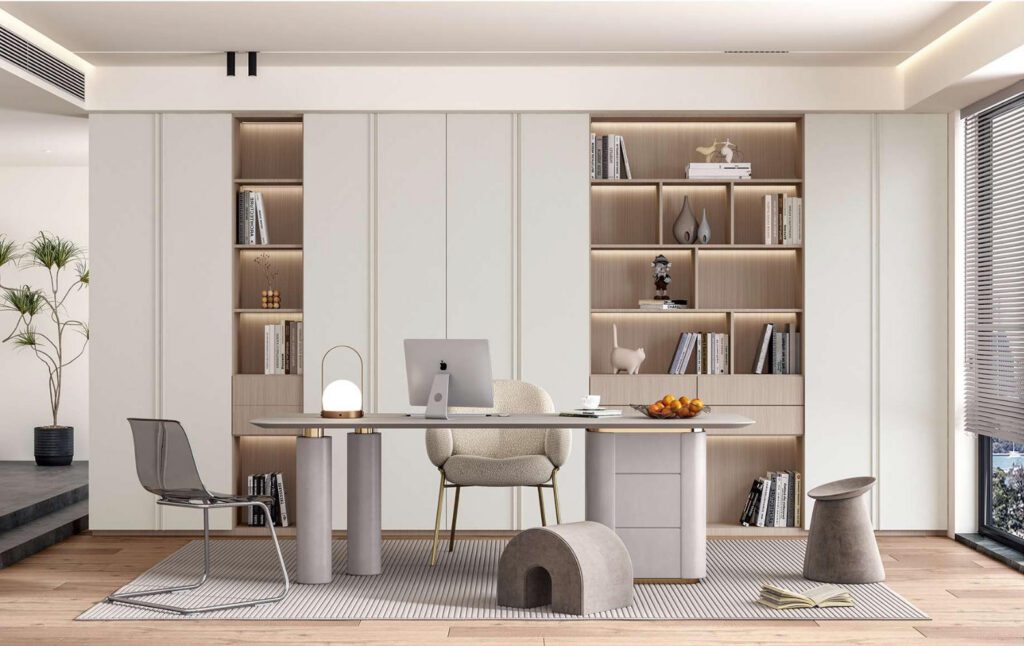
At the same time, it also has unavoidable shortcomings: first, its performance is highly dependent on the quality of the base material. Inferior base materials are prone to deformation, poor nail-holding power and other problems, which affect the service life; second, the surface is hard, making secondary processing difficult. It cannot be painted on site or undergo complex carving, with insufficient flexibility; third, its texture is slightly inferior to that of natural wood, lacking the warm touch of solid wood, which makes it suitable for scenarios pursuing practical cost performance rather than extreme texture.
Combined with the core characteristics of melamine board, judging its quality can be done from 4 key dimensions, which is simple and easy to operate, helping everyone quickly avoid inferior products: first, check the environmental protection level. Prioritize products that meet the requirements of the new national standard GB 18580-2025. Wood-based panel products need to reach E0 level or above. You can ask the merchant for a third-party test report with CMA qualification to verify the formaldehyde emission. At the same time, smell the odor—high-quality boards only have a slight smell of wood itself, with no pungent odor. The stronger the pungent odor, the higher the formaldehyde content may be; second, check the surface quality. High-quality boards have a smooth and flat surface without burrs, no glue penetration, local yellowing or other problems, with clear texture and uniform color, no scratches, bubbles, damage or other defects, and no sense of unevenness when touched; third, check the edge banding and gluing performance. Qualified boards have flat edge banding without gaps or glue detachment, and the edge banding strip is closely attached to the board, with a recommended thickness of 1-1.5mm. Gently pulling the edge banding without loosening indicates good gluing performance, which can effectively prevent moisture and reduce formaldehyde emission; fourth, check the base material and logo. High-quality base materials are mostly medium-density fiberboard or high-quality particleboard, with uniform internal density and no obvious gaps. At the same time, the surface of the board should be printed with clear manufacturer name, address, trademark and other logos. Products without any logos have unguaranteed quality.